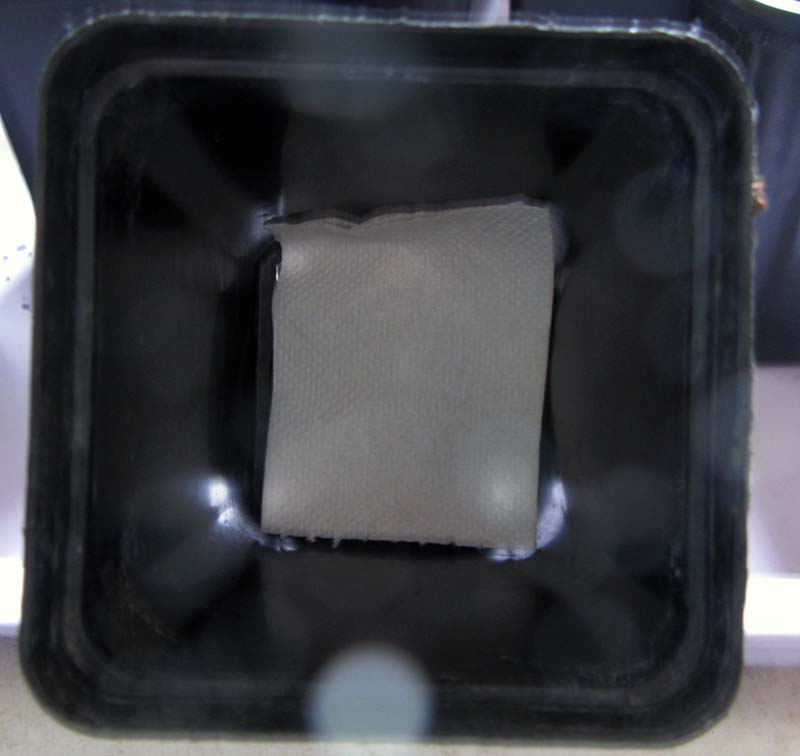
2. Toilet paper Sheets
(pure Cellulose)
lay on the bottom, to prevent the soil
from being washed away.
1. Preparing the pots:
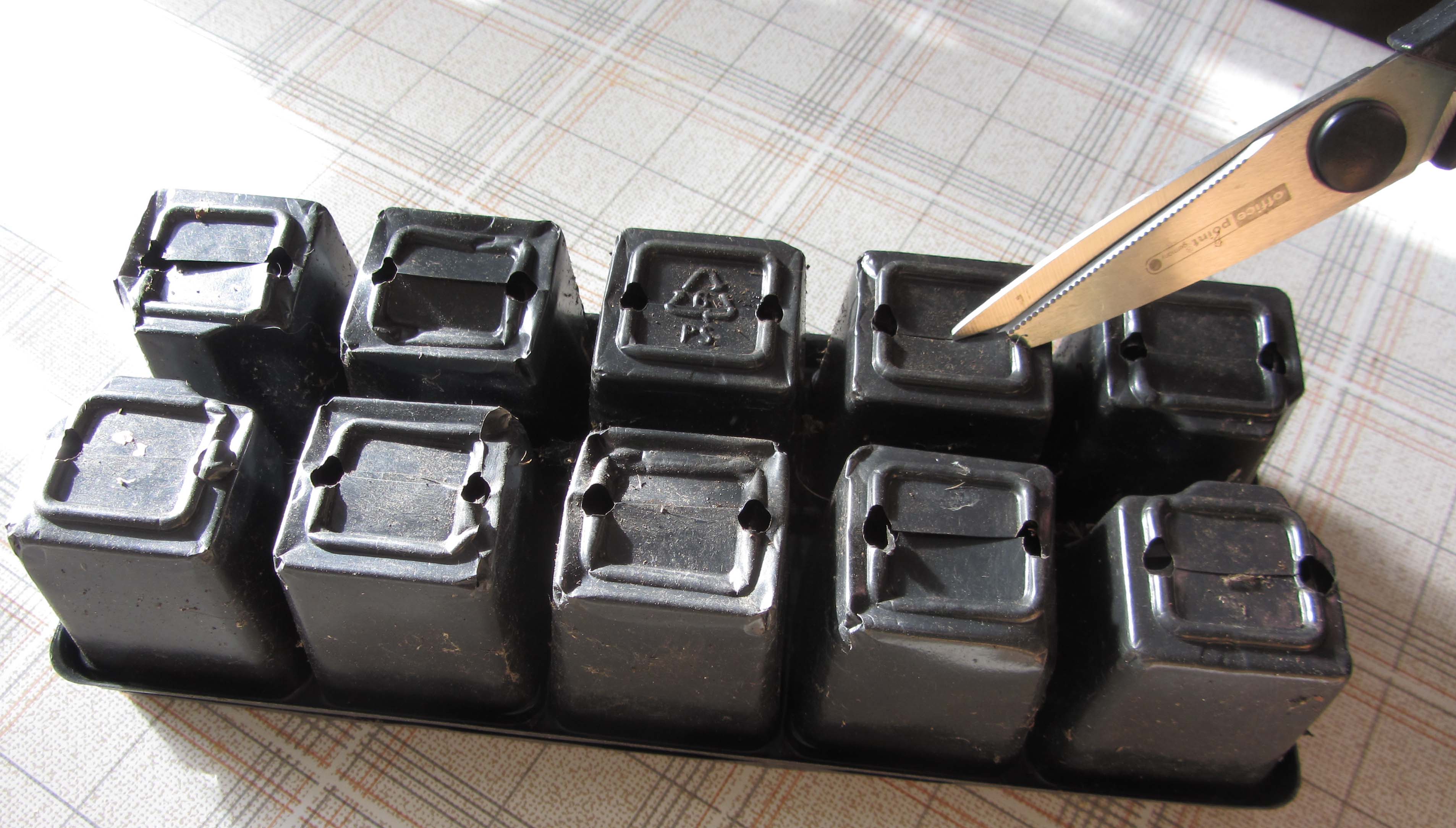
If you want to use so-called trays,
make a cut from hole to hole
so that you can easily remove
the plants later.
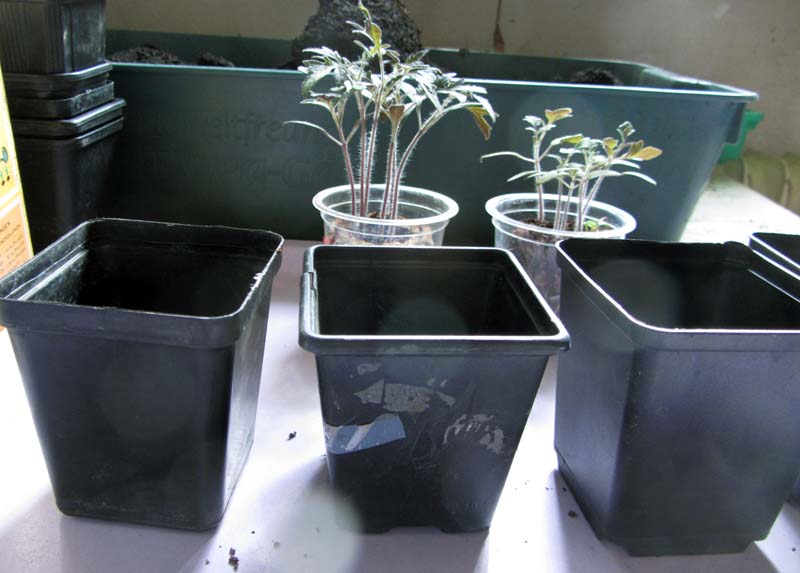
Single pots should not be too large, because soil that
is not penetrated by roots acts like a wet compress,
which can cause the roots to rot.
.
.
Startseite
Inhaltsverzeichnis
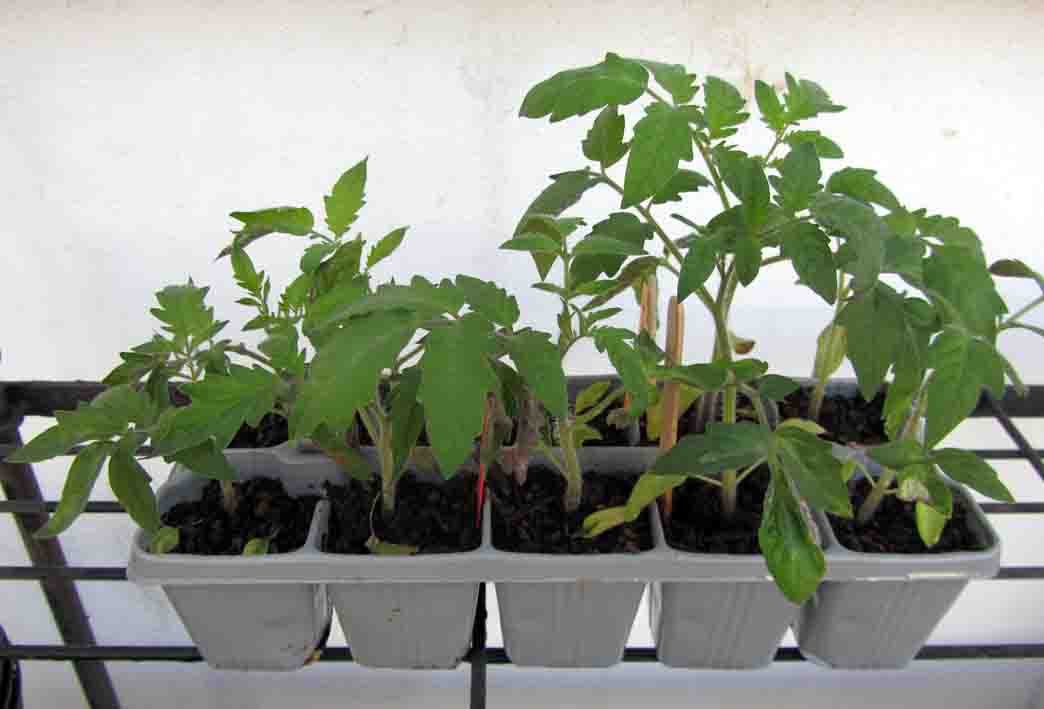
Tomatoes have a growing season that is longer than our Central European summers. That is why they are grown indoors from February/March, pricked out and only planted outside after the last frost.
Pricking Tomatoes
©Hannelore Goos 2026
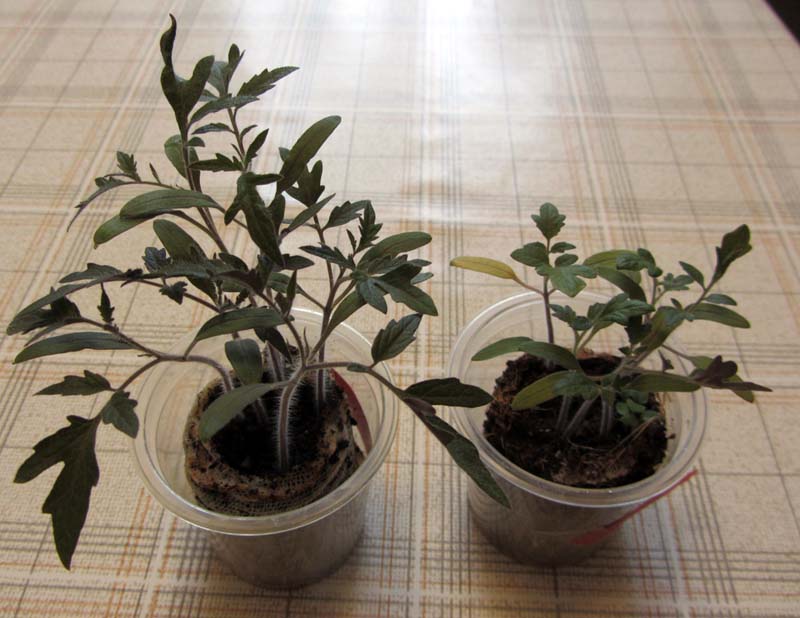
These tomato seedlings have grown in Niem coins.
They each have at least four real leaves and can now be pricked out.
In my experience, the best tool for this is a Chinese chopstick..
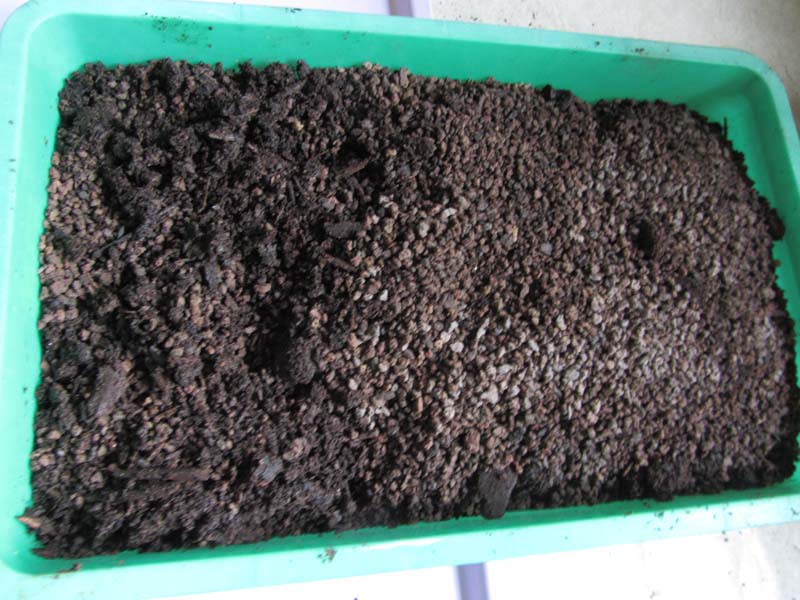
3. Tomato soil mix
with 1/3 lava granulate
to reduce nutrient content.
Commercially available tomato
soil is often over-fertilised, which
damages the roots.
with 1/3 lava granulate
to reduce nutrient content.
Commercially available tomato
soil is often over-fertilised, which
damages the roots.
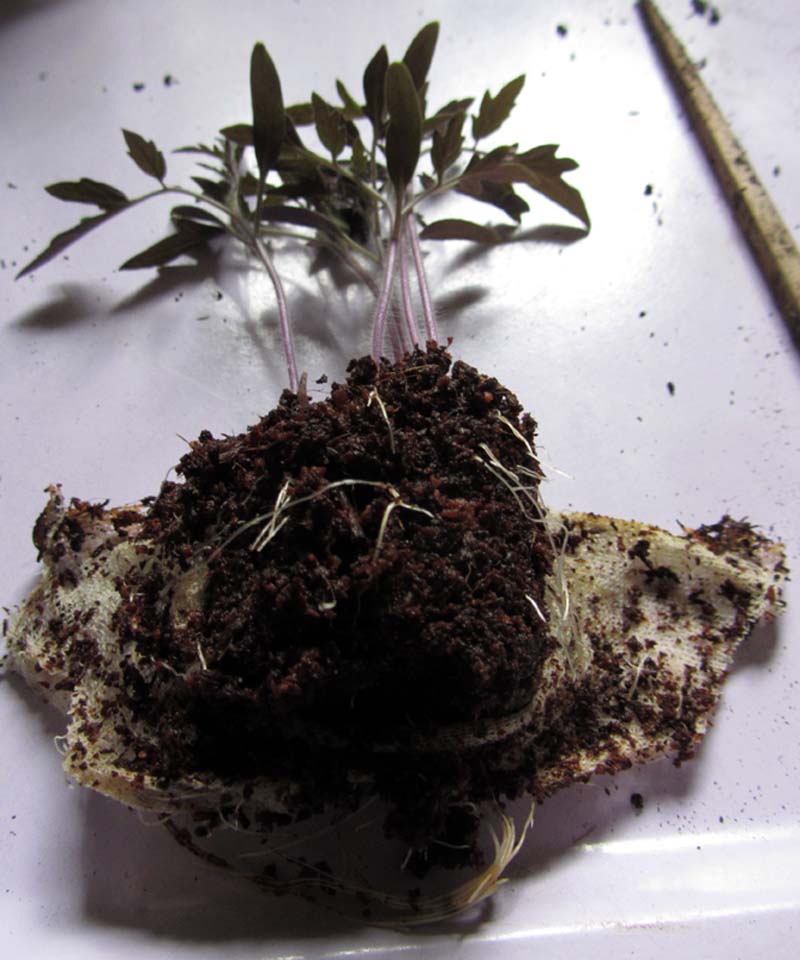
4. Cut open and remove the wrapping from the cocofibre balls.
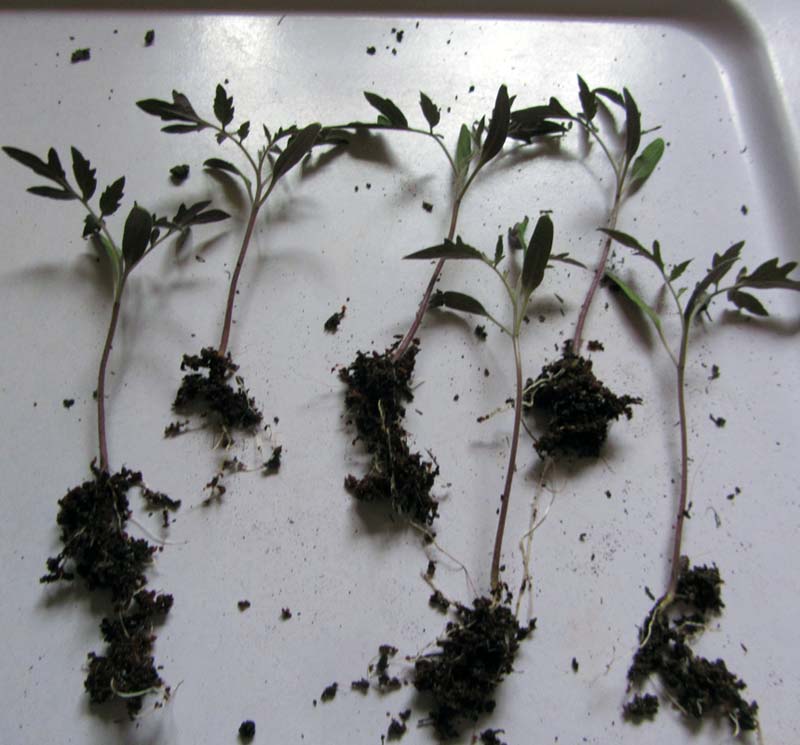
5. Carefully pull the seedlings apart..
6. Fill the pots with soil and make a hole in the middle.
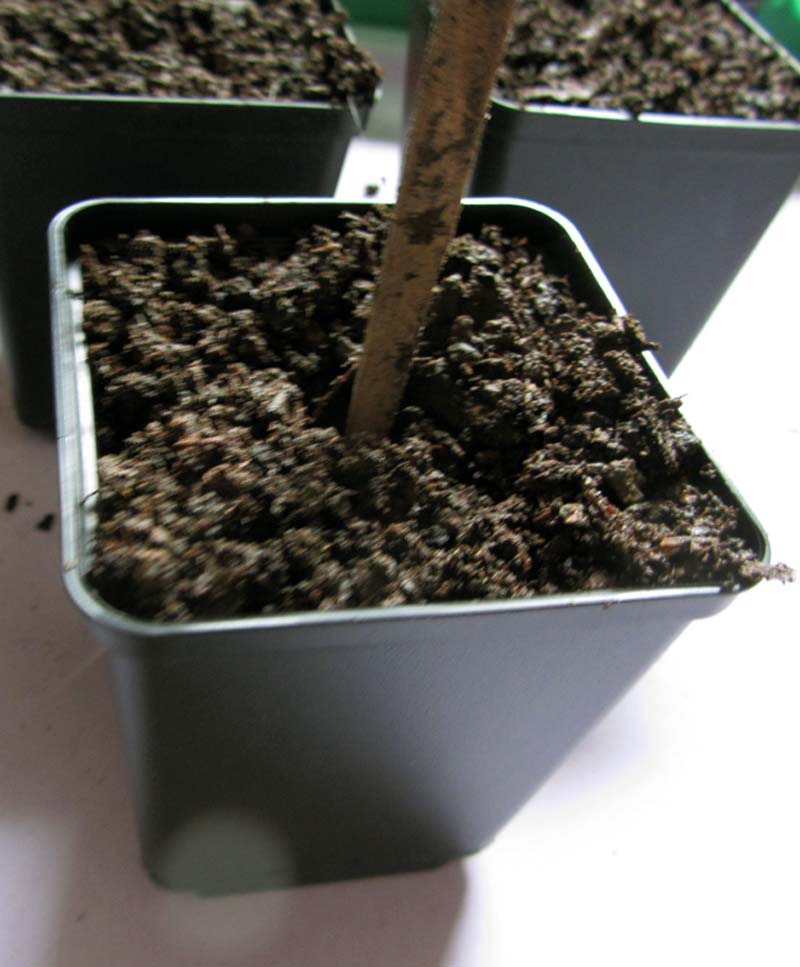
7. . Put ½ teaspoon of mycorrhizal expanded clay into each hole.
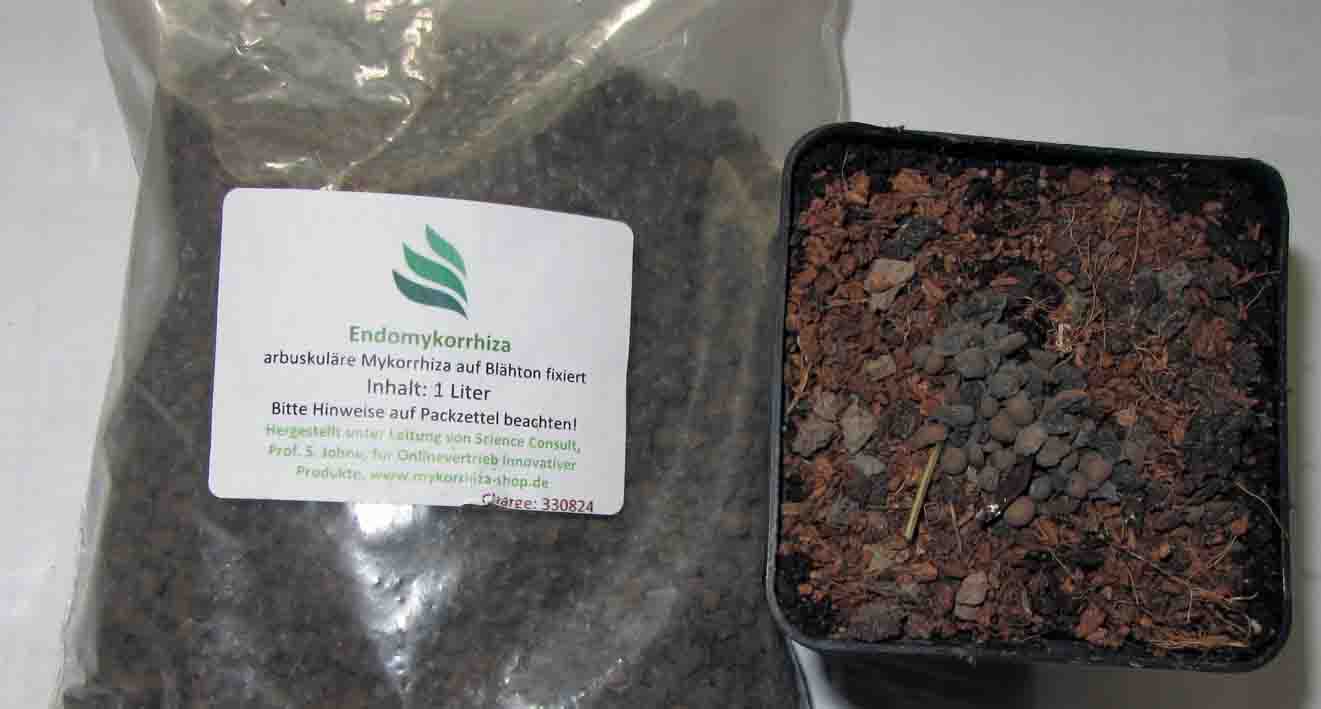
8. Now place a seedling as deep as possible into each
hole so that the bare roots come into contact with the
mycorrhizae pellets and press the soil firmly around
it.
hole so that the bare roots come into contact with the
mycorrhizae pellets and press the soil firmly around
it.
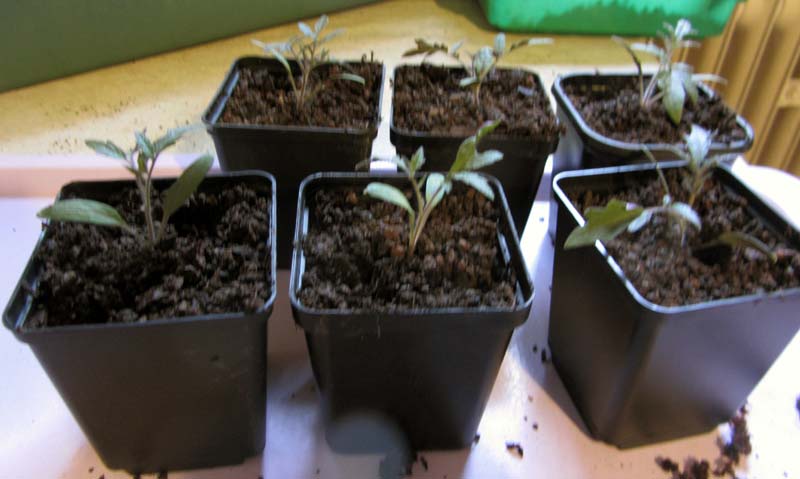
9. Don't forget the labels!
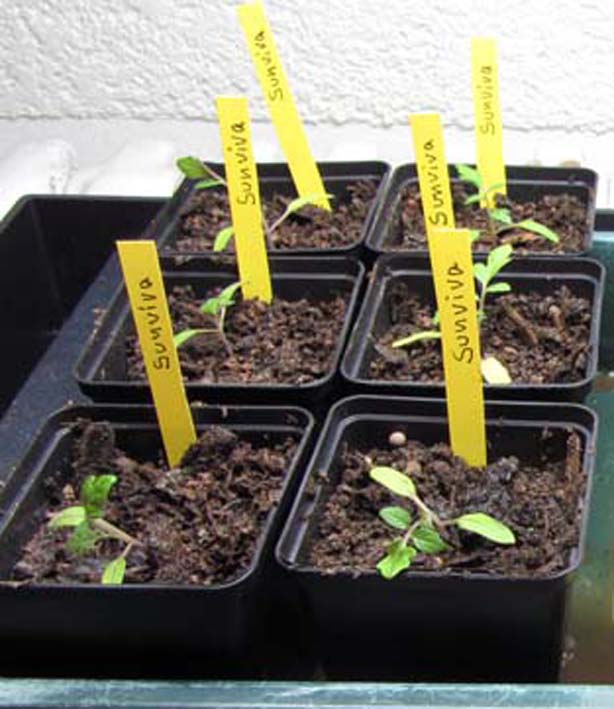
After pricking out, place the tomatoes in a cool (±18°C) and very bright spot so that they grow strong and sturdy. Window light is not sufficient if you have double or triple glazing!
It is normal for them to stop growing at this stage; the symbiosis must form and new roots must grow. Do not use fertiliser to "help" them along, as this will interfere with healthy development! Fertiliser should only be used again when planting in the bed (lime and sheep's wool pellets).